A Wood Stove Is a Consumable With a Steel Shell Around It
People treat wood stoves as appliances that either work or are broken. They are closer to something with service intervals. The parts that wear are known, they wear predictably, and every one of them is cheap while the stove is cold in June and awkward once it is the only heat in the cabin in January.
Door and glass gaskets flatten and stop sealing, which lets the fire draw air where it wants rather than where the designer intended - so the stove burns hotter than you set it, eats wood and glazes the flue. Baffles and secondary burn tubes sit in the hottest gas path and warp or burn through. Firebrick cracks, which is normal, then falls out, which is not.
A Pellet Stove Is a Machine, and That Is a Different Problem
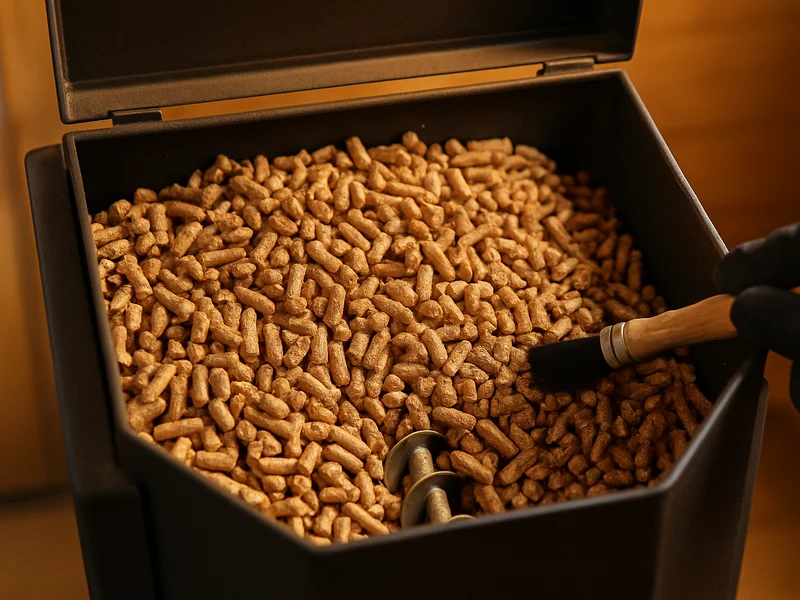
Pellet appliances get lumped in with wood stoves and they should not be. A pellet stove has an auger, a combustion blower, a convection blower, a hopper, igniter and a control board. It is closer to a small furnace than to a wood stove, and like any machine with moving parts it has a genuine annual service interval that the manual states and almost nobody follows.
What we find, in order of frequency: exhaust blowers caked solid with fly ash so the appliance cannot maintain combustion airflow; heat exchanger passages packed enough that the stove runs but puts out half its rated heat; auger flights worn or jammed by a bag of fines; and door and hopper gaskets gone, which lets the negative-pressure firebox pull air from the wrong place and produces the smell people describe as burning.
None of that is a fault, it is maintenance. The failure mode people experience - stove shuts itself down on the coldest night of the year and throws an error code - is almost always the end of a long ignored service interval rather than a broken part.
What's Included
- Wood: door, glass and ash-pan gaskets, firebrick, baffles and burn tubes
- Pellet: exhaust and convection blowers pulled and cleaned, heat exchanger cleared
- Pellet: auger, hopper, igniter and gaskets checked and replaced as needed
- Vent run inspected on both types - horizontal pellet vents included
- Draft measured and diagnosed before anybody proposes buying parts
Draft Problems Are Usually Not the Stove
The most common call we get is some version of "it used to work and now it doesn't". The appliance is the least likely culprit. In order: the flue or pellet vent is dirty; the wood is wetter than the owner believes; the house is tighter than the stove's air supply assumes and it is competing with a range hood; the flue is oversized or too short; and only then something inside the stove.
Elevation compounds all of it. At 6,400 to 7,200 feet there is meaningfully less oxygen per unit volume than a sea-level manual assumes. Wood stoves run lazier and dirtier at the settings the book recommends, and many pellet stoves need their air or feed trim adjusted from the factory default - which is a five-minute job that transforms how the appliance runs and that nobody does because nobody mentions it at the point of sale.
Stove service by town
Stove not drawing right?
Tell us what it does and when. Draft complaints are usually diagnosable before anyone buys a part.
Get a Free Quote