Water Is the Enemy Here, Not Heat
People assume a chimney fails from the inside out - heat, creosote, fire. In the White Mountains that is not usually what kills them. What kills them is the combination of the Arizona monsoon and 6,400 feet of elevation, and it works from the outside in.
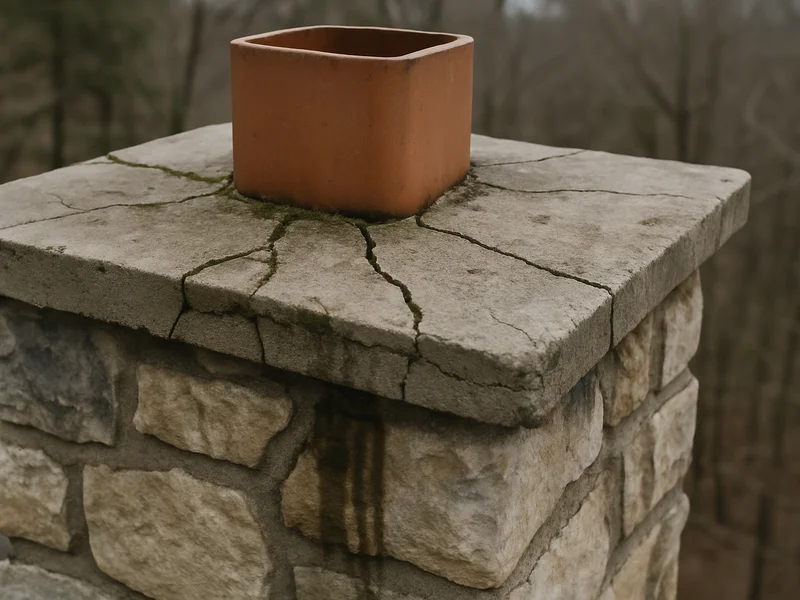
The monsoon runs July through September and delivers the bulk of the year's rain in a handful of weeks, in intensities the rest of the state's roof details were never designed around. Water finds the crown first, because the crown is a horizontal concrete surface sitting on top of everything else. Any crack takes it in. From there it soaks into the masonry and into the gap between the liner and the brick.
Then winter arrives. Up here that means dozens of freeze-thaw cycles, not the one long freeze you get further north. Every cycle expands the water in that crack and levers the gap a fraction wider. Run it for twenty seasons and the crown is not cracked, it is in pieces, and the masonry under it is spalling.
What's Included
- Crown inspected and photographed, cracks measured rather than eyeballed
- Hairline cracking sealed with flexible crown coating; failed crowns rebuilt
- Masonry treated with breathable siloxane repellent - not a film-forming sealer
- Step and counter-flashing checked and resealed while we are on the roof
- Written note of what was done, with before and after photographs
Breathable Repellent, Not Waterproof Paint
This distinction matters more than anything else on this page, and it is where most bad waterproofing jobs go wrong. Masonry has to be able to dry outward. A siloxane or silane repellent soaks in and stops liquid water entering while still letting vapour out. A film-forming sealer - anything that leaves a visible sheen, and certainly anything sold as waterproof paint - traps moisture inside the brick.
Trapped moisture at this elevation is worse than no treatment at all. It freezes behind the sealed face and takes the face off with it, which is exactly the spalling the treatment was supposed to prevent. If a previous contractor left your chimney looking glossy, that is worth a conversation before anyone applies anything else.
Order of Operations
If budget forces a choice, the order is not negotiable: crown first, flashing second, repellent third. Sealing the masonry face while the crown is still open is treating a symptom - water will simply keep arriving from above and now it cannot get out. We will tell you that even when it means a smaller invoice this year.
Waterproofing and crown work by town
Before the monsoon, not after
Crown and sealing work wants dry weather and cure time. May and June are the right window.
Get a Free Quote