Shade Is Not Protection
Cabin owners often assume that sitting under a dense canopy shelters a chimney. It reduces direct rain, which is real. What it also does is stop the masonry drying, and that turns out to matter more.
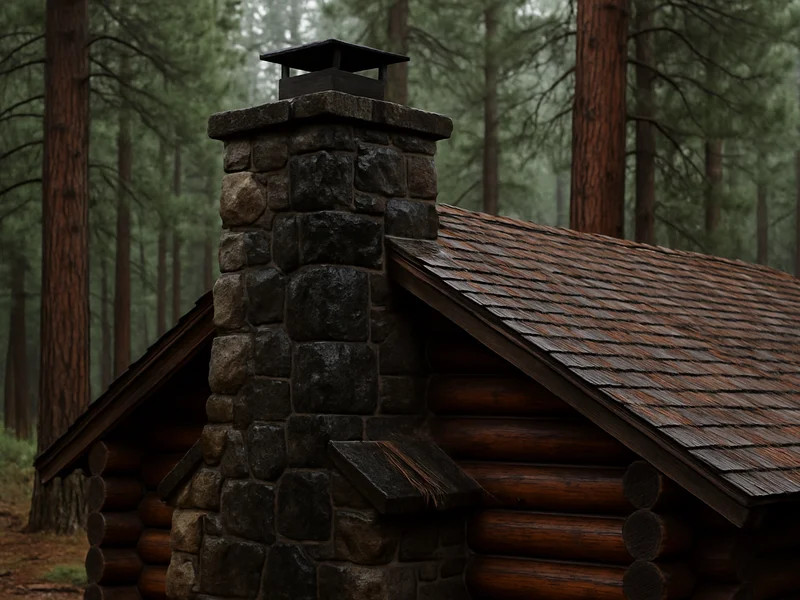
A chimney in full sun in Snowflake is soaked by a monsoon storm and dry by afternoon. The same chimney under Pinetop pines stays damp for days, because there is no direct sun on it and the humidity under a closed canopy stays high through the monsoon. Masonry that never fully dries carries a much higher moisture content into the first freeze - and it is water inside the masonry at the moment it freezes that does the damage.
That is why the chimneys we see with the worst spalling in this area are not the exposed ones. They are the shaded north-facing ones with organic growth on the stone.
Organic Growth Is a Symptom, Not a Cosmetic Issue
Moss, algae and lichen on a cabin chimney tell you the masonry is holding moisture long enough to support them. They also hold more water against the surface themselves, which accelerates the problem they indicate. Cleaning them off without addressing why the stone is wet just resets the clock.
So on a Pinetop chimney the sequence is: clear the growth, let the masonry properly dry, then apply breathable repellent - which is why this cannot be a same-day job, and why anyone offering to do all three in one visit after a rainy week is not going to give you a result that lasts.
Overhanging Branches
While we are up there we will flag branches directly over the flue. They drop the needle load that blocks the chimney, they keep the crown permanently shaded and wet, and in a fire they are the obvious problem. We do not cut them - that is an arborist's job - but you will hear about the ones that matter.
Also in Pinetop-Lakeside
Chimney Waterproofing & Crown Repair elsewhere
Chimney Waterproofing & Crown Repair in Pinetop-Lakeside
Tell us the appliance and how it is used. You get a firm number before anyone starts.
Get a Free Quote