There Is Nothing to Reline, Because There Was Never a Tile
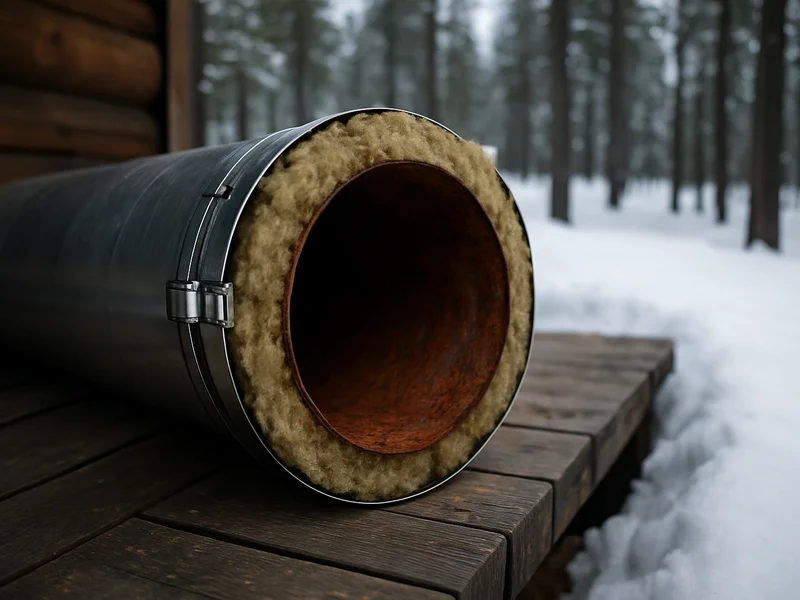
Relining as a phrase assumes a masonry chimney with a clay liner inside it. In Pinetop and Lakeside that assumption is wrong more often than it is right. The cabins here mostly vent through factory-built class-A insulated pipe - a stainless inner wall, an insulation layer, and an outer shell, in locking sections from the appliance to the cap.
That is a good system and it is not permanent. The sections were listed for a service life, most of what is up here went in between the late seventies and the nineties, and a lot of it is now past it. The job is not lining a chimney, it is replacing a chimney, and it is worth knowing which conversation you are having before somebody quotes you.
Why Weekend Cabins Wear These Out Faster
The failure is almost always the inner wall, and it corrodes from the inside. The mechanism is the same cold-start problem that drives the creosote story on the sweeping page for this town, arriving at a different component.
A cabin used every second or third weekend runs a cold flue on every single burn. The first hour of every fire is condensing, not drafting - moisture and acids from the wood condense on a cold stainless wall and sit there until the next visit. A house heated continuously through the winter puts the flue above condensing temperature and keeps it there. Same pipe, same wood, very different lifespans, and it is the reason the pipe on a full-time home in Lakeside can outlive the pipe on a holiday cabin two streets away by a decade.
What We Look At
Joints first, because the locking bands are where movement concentrates and where you see rust staining outside before anything is visible inside. Then the storm collar and the flashing seal, which perish under UV at this elevation faster than people expect. Then the inner wall itself, looking for rust scaling, pitting or perforation - a light held inside a section shows a perforation immediately.
The other thing worth naming here is snow. The exposed pipe above a cabin roof in Pinetop carries real snow load and, worse, sliding load off a metal pitch. Sections get shifted at the joint, and a shifted joint on a class-A system is a direct gap between flue gas and a timber roof structure. We check the guy bracing and the roof support box every time we are up there, whether or not that is what we were called for.
Also in Pinetop-Lakeside
Chimney Relining & Liner Repair elsewhere
Chimney Relining & Liner Repair in Pinetop-Lakeside
Tell us the appliance and how it is used. You get a firm number before anyone starts.
Get a Free Quote